
Temporary summer shade should be easy to use, comfortable in warm weather, and realistic about changing conditions, which is the context in which SUNJOY soft-top gazebos should be assessed. Soft-top gazebos meet those needs by combining a fabric canopy with a frame that typically has less visual and physical mass than a more substantial hardtop shelter.
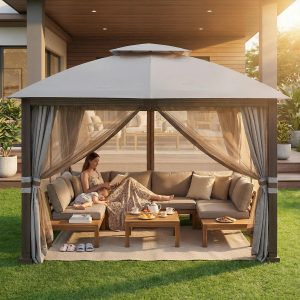
An outdoor soft top gazebo can define a dining area, cover lounge chairs, or create a shaded place for a seasonal gathering without making the yard feel permanently enclosed. Its flexibility, however, rests on responsible installation and storage.
Fabric roofs react to wind, moisture, ultraviolet exposure, and debris differently from metal roofs. The structure should therefore be treated as adaptable fair-weather shade instead of as a substitute for an engineered all-season building.
Benefit from Lighter Shade and Faster Seasonal Setup
Fabric canopies filter strong sunlight while allowing the covered area to feel open. Many Soft top gazebos use two-tier roofs, and the upper vent can help warm air escape while allowing some wind to pass through the canopy system.
That ventilation is valuable on a humid afternoon, when a tightly enclosed roof and closed curtains may trap heat. A lighter frame can likewise be easier to position or disassemble than a substantial hardtop structure, although the completed unit may still require several adults to handle safely.
An outdoor soft top gazebo works well when its footprint matches the event: enough room for furniture and circulation, but not so large that it occupies the entire lawn. Removable netting and curtains add flexibility for insects or low-angle sun. Their value comes from being opened, closed, and secured deliberately instead of left to move freely in changing wind.
Temporary use should still follow a defined season. The household can decide in advance when the canopy will be installed, when it will be inspected, and when it will be removed for storage. A schedule prevents fabric from remaining exposed simply because dismantling was postponed.
Anchor, Monitor, Dry, and Store the Canopy
Portability does not remove the need for anchoring. The correct anchors depend on whether the structure stands on concrete, a deck, or lawn, and all legs should be secured according to the manual. A large fabric roof can catch wind, so owners should monitor forecasts and follow the model’s guidance for removing or securing the canopy, curtains, and netting.
Soft top gazebos should not remain occupied during thunderstorms or severe gusts. After rain, the canopy needs to dry thoroughly before storage; folding damp fabric encourages staining, odor, and material deterioration. Debris should be brushed away gently, and water should never be allowed to form heavy pockets overhead.
An outdoor soft top gazebo also benefits from seasonal inspection of seams, hook-and-loop fasteners, grommets, frame joints, and powder-coated surfaces. Small repairs completed early can prevent a minor tear or loose connection from becoming a larger problem.
Fabric color and density affect comfort. Darker canopies may lower glare but can absorb more heat, while lighter material may brighten the space and show dirt sooner. Product specifications, not color alone, should guide expectations for UV protection and water resistance.
Assess SUNJOY Soft-Top Designs by Intended Use
SUNJOY’s official soft-top collection includes square, rectangular, and hexagonal models in several sizes. The company highlights features such as breathable shade, UV protection, water resistance on selected models, removable curtains, mosquito netting, and vented two-tier canopies. It also describes reinforced anchoring kits for installation on common surfaces.
These features make a SUNJOY outdoor soft top gazebo suitable for routine summer seating and gatherings when weather conditions are moderate. The exact product page should still be reviewed for frame material, canopy fabric, anchoring hardware, dimensions, and storage directions.
SUNJOY traces its outdoor-living work back to 2001, yet no brand name changes the limitations of fabric in high winds or severe weather. A household comparing Soft Top Gazebos should select a model based on occupancy, site exposure, and the ability to remove or store components when conditions demand it.
Storage conditions influence the next season’s performance. The canopy must be completely dry, folded without sharp creases where possible, and kept away from rodents or damp floors. Frame parts should be cleaned and labeled so that reassembly does not rely on memory.
Soft-top shelter is valuable because it adapts to the season. It may provide breathable shade, an insect barrier, and a defined outdoor room without the permanence of a hardtop roof. Its usefulness rests on secure anchoring, attentive weather monitoring, complete drying, and appropriate storage.
When an outdoor soft top gazebo is selected for normal summer conditions and maintained according to its design, it offers practical flexibility. When it is expected to remain in every storm, the same lightness that makes it convenient becomes a limitation.
Responsible use preserves both safety and service life. SUNJOY Soft top gazebos are therefore better understood as managed seasonal shelters whose flexibility rests on anchoring, monitoring, drying, and timely storage. Before the first installation, users can practice removing the canopy and panels in calm weather.
Familiarity with fasteners, folding order, and storage bags shortens the response when a strong-wind forecast arrives and limits the temptation to leave the structure exposed. A dry, labeled storage area protects fabric and hardware, shortens the next setup, and reveals missing components before the season begins. Buyers should evaluate each SUNJOY soft-top gazebo against the site’s weather exposure, storage space, and seasonal-use requirements.